PTIT CTF 2022: my first CTF prize
PTIT CTF 2022 was the first CTF I ever placed in. It was only a consolation prize, the lowest one on the board, but I still remember how it felt to see my name on the list.
Some context first. PTIT CTF is the student security contest run by the Faculty of Information Security at my school, individual and Jeopardy style, with web, crypto, pwn and reverse engineering. I had joined ISP Club a few months earlier and I was very much a beginner. I could clear the easy challenges and then sit staring at everything else.
When I started training with the older members at the club, I did what most people do at the start. I tried a bit of everything. Web one week, crypto the next, then forensics, then pwn. Each category felt like its own small world with its own tools and its own way of thinking. Some challenges finally made a concept click and I would feel good about myself for an afternoon. Others had me rereading the same writeup five times and still not getting it.
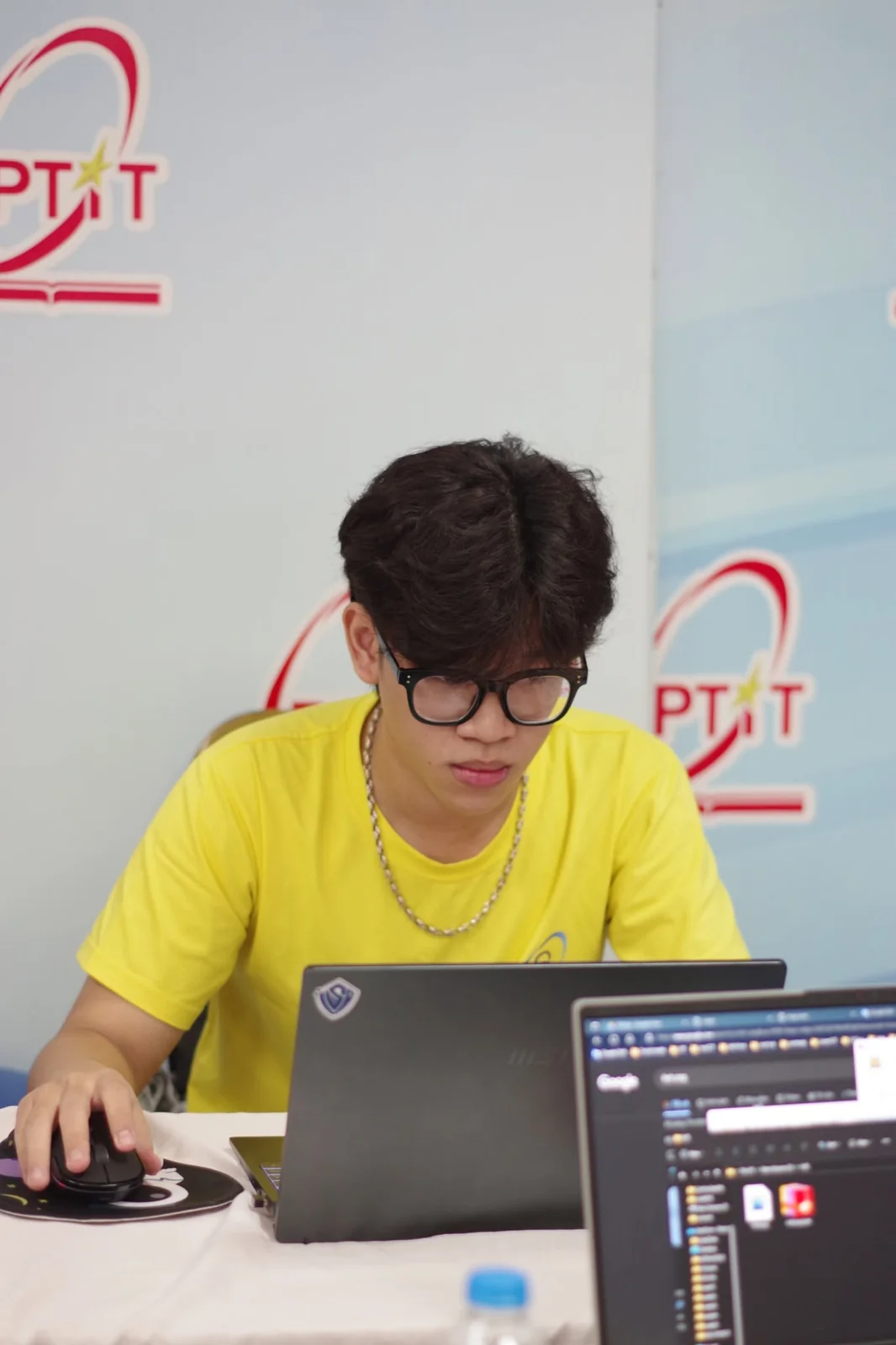 During the PTIT CTF 2022 final.
The honest part is that trying everything left me with no direction. I knew a little of each area and was good at none of them. picoCTF became my practice ground, and plenty of evenings ended with me giving up and opening someone else’s solution, then feeling stupid for not seeing it myself. I started to wonder whether I was actually cut out for this or just too stubborn to quit.
I almost talked myself out of entering PTIT CTF 2022. I had no strong category and I did not expect to do well. I signed up mostly to find out where I stood.
A contest is not like solving labs at home. You cannot sit on one problem until it finally makes sense. You read a challenge, decide fast whether it is worth your time, and move on if it is not. That pressure is uncomfortable, but it also shows you something about yourself. What it showed me was that I kept drifting back to the reverse engineering challenges, and that I was actually solving them.
I had not expected that. I had treated RE like any other category, one more thing on the list to learn. But I liked the shape of it. You open a binary and get almost nothing, a pile of instructions, some meaningless function names, a control flow you cannot follow yet. Then you ask one question, test it, follow a single thread, and the thing slowly starts to make sense. That slow walk from no idea to a working picture was the part I enjoyed, and I never felt that pull with the other categories.
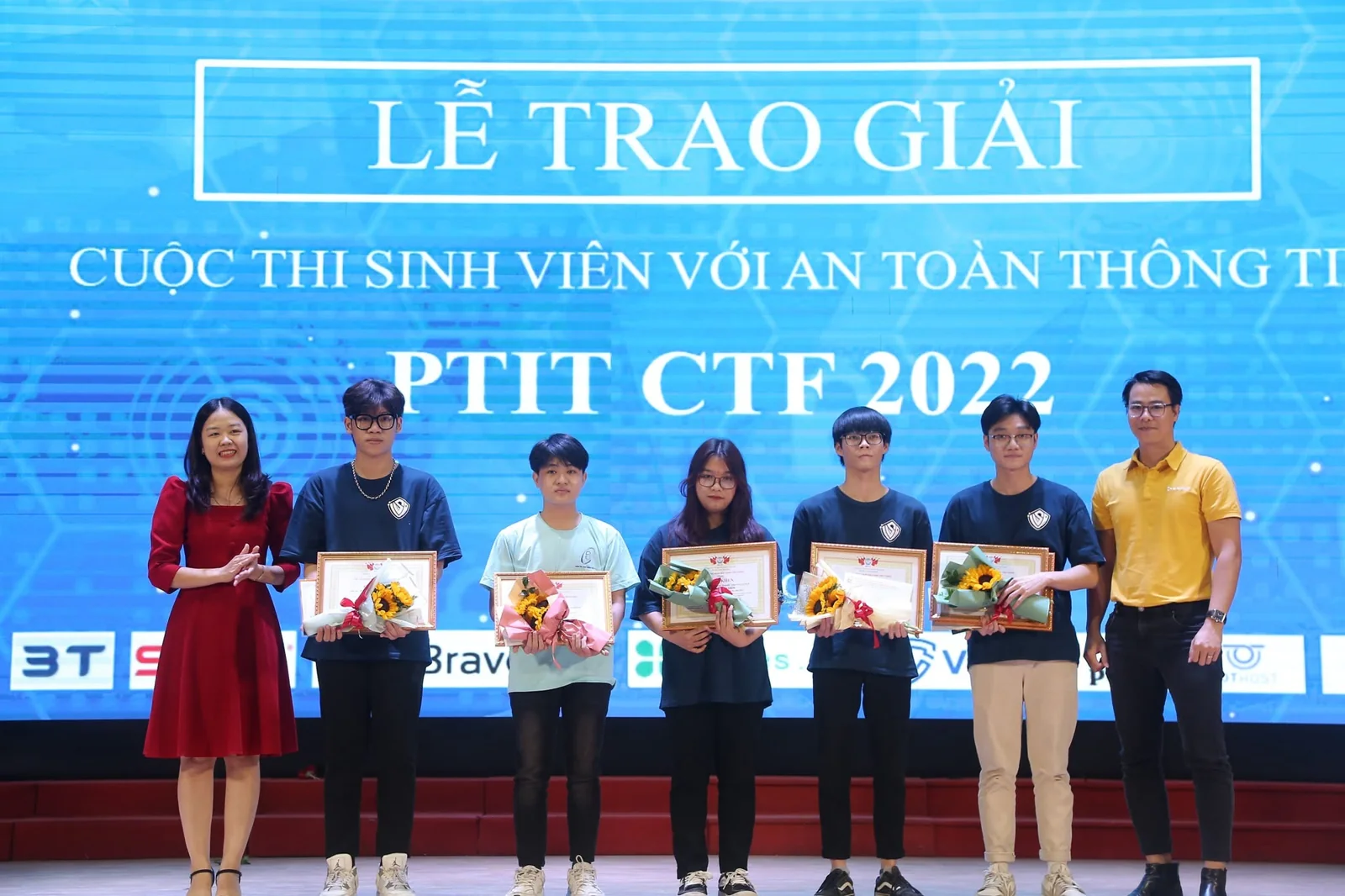 Awards ceremony, PTIT CTF 2022.
I finished with a consolation prize. It is not a result anyone would put on a poster. But it was the first time my effort turned into something I could point at, and it changed how I looked back on those messy months. The lost evenings were not wasted. The habit of reading writeups, digging through docs and testing one guess at a time was the exact foundation that let me solve the RE challenges at all.
After that I stopped trying to be passable at everything and started going deeper on reverse engineering. How a program is compiled, how the machine runs it, how to read control flow, how to drive a debugger. There was, and still is, plenty I do not know. But for the first time I was learning because I wanted to understand one thing properly, not because I was afraid of missing out on another.
I played the same contest the next year and took second prize, so the extra practice clearly paid off.
If you just joined a club and you are hesitating to enter a contest because you feel you do not know enough yet, enter anyway. You will not find out what you are good at until you are sitting in front of the problems. That is how I found mine.